Online food delivery has fundamentally reshaped Indian dining. In 2026, Zomato and Swiggy collectively account for the vast majority of restaurant delivery orders across the country — and for many venues, delivery now represents 30–50% of total revenue. If you are not on one or both platforms, you are leaving a significant revenue stream untapped. If you are already listed, you may be wondering whether you are on the right platform — or spreading yourself too thin.
This guide breaks down both platforms honestly — their reach, commission structures, tools, and support — and helps you decide what makes sense for your venue type.
Zomato: An Overview
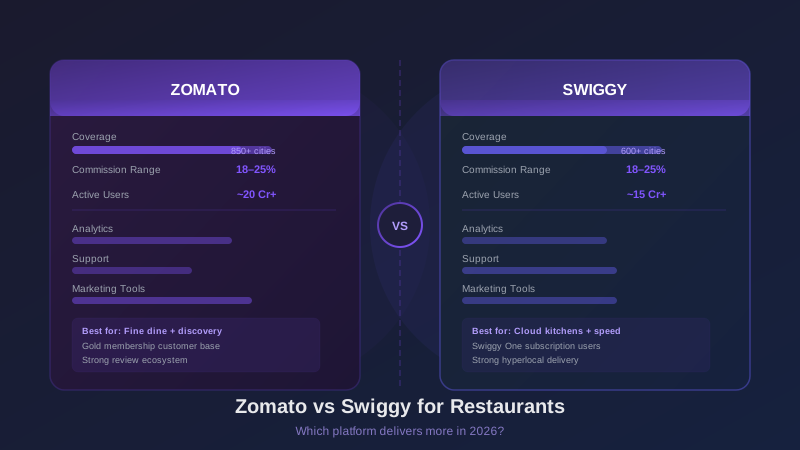
Zomato is India's largest food delivery and restaurant discovery platform by active users, with a presence in over 850 cities. Beyond delivery, it is also a powerful discovery engine — restaurant pages with strong ratings and reviews drive walk-in guests who find you through the app's search and recommendation features.
Key features for restaurant partners include:
- Zomato for Business dashboard: Real-time order tracking, menu management, customer reviews, and sales analytics
- Zomato Gold / Pro programme: Drives high-value dining customers to your venue — Gold members tend to have higher average spend
- Sponsored listings and ads: Pay to appear at the top of category searches in your area
- Discount programmes: Platform-funded and co-funded discounts to drive volume during slower periods
- Hyperpure: Ingredient sourcing service for partnered restaurants
Commission rates on Zomato for delivery orders typically range in the 18–25% bracket, though exact terms vary by market, restaurant category, and negotiated agreements. New restaurants often receive an onboarding package with reduced commissions for the first few months.
Swiggy: An Overview
Swiggy was the category pioneer in Indian food delivery and remains a formidable platform, particularly strong in metros and Tier 1 cities. Its logistics infrastructure and delivery speed are widely regarded as among the best in the industry, which matters directly to guest satisfaction scores for your restaurant.
Key features for restaurant partners include:
- Swiggy for Restaurants portal: Order management, menu editing, payout tracking, and performance analytics
- Swiggy One subscription: Premium subscription that waives delivery charges for frequent users — these subscribers tend to order more often, benefiting high-volume restaurants
- Swiggy Instamart: Separate quick-commerce offering — relevant if you also sell packaged products or grocery-adjacent items
- Campaign management tools: Banner ads, category placements, and featured listings
- Swiggy Access: Shared kitchen spaces in select cities for cloud kitchen operators
Swiggy's commission structure is broadly similar to Zomato's, in the 18–25% range for delivery orders, with variations based on city, cuisine category, and agreement terms.
Note on commissions: Both platforms' actual commission rates are subject to individual negotiation and change over time. The figures above are general market estimates. Always review your current agreement directly with your account manager before making decisions based on commission alone.
Side-by-Side Comparison
| Criteria | Zomato | Swiggy |
|---|---|---|
| City Reach | 850+ cities, stronger in Tier 2 & 3 | 600+ cities, stronger in metros |
| Commission Range | ~18–25% (approximate) | ~18–25% (approximate) |
| Partner Support | Dedicated account manager for mid-large accounts | Dedicated account manager for mid-large accounts |
| Analytics | Strong — detailed sales, ratings, and review insights | Good — delivery metrics and order analytics |
| Discovery / Dine-In | Excellent — major driver of walk-in guests via reviews | Limited — primarily a delivery-first platform |
| Premium Customer Base | Gold/Pro programme targets higher-spend users | Swiggy One attracts high-frequency orderers |
| Listing Speed | 5–10 business days typically | 5–10 business days typically |
| Marketing Tools | Sponsored listings, banner ads, discount campaigns | Featured listings, campaign tools, category placements |
Which Platform Should You Choose Based on Venue Type?
Cloud Kitchens and Delivery-Only Brands
For delivery-only operations, being on both platforms is almost always the right call. Cloud kitchen economics depend on maximising order volume, and artificially limiting your reach to one platform significantly constrains growth. Focus on Swiggy if your city-level presence is strongest in metros; consider Zomato first if you are launching in a Tier 2 or Tier 3 city where its reach is deeper.
Fine Dining Restaurants
Fine dining restaurants benefit disproportionately from Zomato's discovery and review ecosystem. Your Zomato page is often the first impression a potential guest has of your restaurant — ratings, photographs, and curated reviews carry significant weight in booking decisions. Swiggy is less of a dine-in discovery tool, though listing there for delivery is still valuable for revenue diversification.
Casual Dining and QSR
Casual dining restaurants typically see strong performance on both platforms. The decision often comes down to which platform has better brand recognition and user density in your specific neighbourhood. If unsure, test both for 60 days with equal menu availability and promotional investment, then analyse order volumes and margins side by side.
The Case for Being on Both Platforms
For most restaurants, being present on both Zomato and Swiggy is the dominant strategy. The incremental operational cost of managing a second platform is low — especially if you are using an order management system — while the incremental revenue is significant. Customers have strong platform loyalty: some households exclusively use Swiggy; others are lifelong Zomato users. If you are only on one, you are invisible to the other camp entirely.
Practical tip: Keep your menu identical across both platforms initially. Operational complexity increases when you run different menus — pricing discrepancies and out-of-stock confusion hurt your ratings. Standardise first, then experiment with platform-exclusive items once you have a stable operation.
Managing Delivery Operations Efficiently
The operational challenge of being on multiple delivery platforms is managing incoming orders without creating chaos at the kitchen pass. Without a consolidated system, staff are juggling two tablets, missing orders, and creating delays that damage your ratings on both platforms simultaneously.
An integrated order management solution — like the one in ZillOut's platform — pulls orders from multiple channels into a single kitchen view, ensures nothing falls through the cracks, and keeps your delivery ratings consistently high. Your reputation on these platforms is built order by order, and a few bad ratings early in your listing history are very difficult to recover from.
Protecting Your Margins on Delivery Platforms
With commissions in the 18–25% range, delivery-only economics require careful menu engineering. Some key principles:
- Price your delivery menu slightly higher than your dine-in menu (3–8%) to account for platform commissions — guests on delivery platforms broadly accept this.
- Streamline your delivery menu to items that travel well and have food costs under 28%. Dishes that look great on the floor but arrive poorly are reputation killers.
- Use platform-funded discount campaigns strategically — they drive volume but at lower margins. Use them during slow periods rather than letting them cannibalise peak-hour full-price orders.
- Monitor your ratings vigilantly. A 3.8-star rating on Zomato suppresses your listing visibility. Respond to negative reviews, investigate patterns, and address root causes within 48 hours.
Final Thoughts
Zomato and Swiggy are not competitors you choose between — they are complementary channels that together define your delivery presence in India. The real question is not which platform, but how to operate across both efficiently while protecting your margins and brand reputation.
Start with the platform that has the strongest user base in your immediate neighbourhood, invest 90 days in building your ratings and reviews, then expand to the second. Get your operations and order management tight before you scale.