Restaurant owners often default to one answer when revenue stalls: add more covers. But expanding seating means higher rent, more staff, more inventory — and often a worse guest experience. The truth is that most restaurants have significant untapped revenue within their current footprint. You just need the right strategies to unlock it.
These 12 strategies are not theoretical. They are drawn from what the most profitable independent restaurants in India and globally consistently do differently. Some cost nothing to implement. All of them compound over time.
1. Train Your Team to Upsell and Cross-Sell
Upselling is the single highest-return activity in any restaurant — and the most under-practised. A server who confidently recommends a premium cocktail pairing, suggests adding a cheese platter, or mentions the dessert special can add ₹200–500 to every cover without any additional marketing spend.
Effective upselling is not pushy; it is informed. Train staff to know the three highest-margin items in every category. Teach them specific language: "Our Malabar prawn curry is exceptional tonight — it pairs really well with the coconut rice" beats "Would you like anything else?" every time. Run a monthly upsell contest with a small incentive for the server with the highest average spend per cover.
2. Optimise Your Menu Engineering
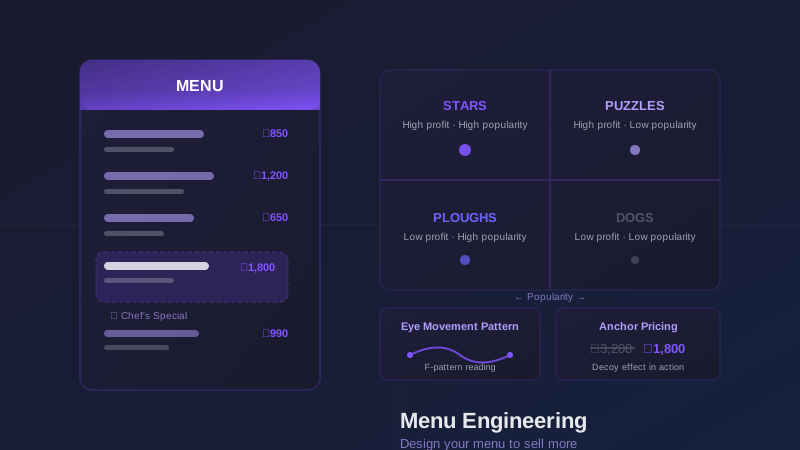
A menu that is designed rather than just listed can increase average spend by 15–30% without changing a single ingredient. Use the four-quadrant model — Stars (high margin, high popularity), Ploughs (high popularity, low margin), Puzzles (high margin, low popularity), and Dogs (low on both). Place your Stars at eye-level positions, use descriptive language, remove currency symbols on premium items, and limit choices per category to avoid decision fatigue.
If you have not done a menu engineering exercise in the last six months, it should be your first priority this week.
3. Launch a Structured Loyalty Programme
Acquiring a new customer costs 5–7 times more than retaining an existing one. A loyalty programme — even a simple points-per-visit system — dramatically increases visit frequency from your most valuable guests. The key is making it frictionless: WhatsApp-based programmes or digital stamp cards outperform physical cards because guests actually use them.
Segment your loyalty members and target high-frequency guests with exclusive early access to new menus, invite-only dinners, or birthday offers. These guests become your most powerful word-of-mouth channel.
4. Host Private Dining and Corporate Events
Your venue is idle during private events that you are not hosting. Buyouts, corporate lunches, birthday dinners, and anniversary celebrations command a premium — and they fill seats on weeknights and off-peak hours when your floor would otherwise be half-empty. Create a dedicated private dining package with a fixed per-head rate, a curated set menu, and a minimum spend threshold. Promote it on LinkedIn (for corporate) and Instagram (for social events).
A restaurant doing just two buyout events per month at a ₹2 lakh minimum can add ₹48 lakh annually to top-line revenue with no new customers required.
5. Implement Dynamic Pricing for Peak Hours
Airlines and hotels have used dynamic pricing for decades. Restaurants are increasingly adopting it — and the data supports it. Charging a small premium (10–15%) on Friday and Saturday evenings, or during festival periods, is accepted by guests who are already expecting a premium experience. A digital menu makes this operationally simple: update prices without reprinting anything.
Conversely, consider off-peak incentives — an early-bird set menu on weekday evenings, or a working lunch special that drives Monday-to-Thursday footfall without cannibalising weekend revenue.
6. Reduce Food Waste Through Portion Analysis
Food waste is a silent margin killer. The National Restaurant Association estimates that the average restaurant wastes 4–10% of purchased food before it even reaches the guest. A systematic portion analysis — weighing ingredients, standardising portion sizes, and running a plate waste audit — can reduce food cost by 2–5 percentage points. On a ₹1 crore revenue base, that is ₹2–5 lakh saved per year without changing a single dish.
Train your kitchen team to treat the portion scoop and weigh scale as seriously as the knives.
7. Speed Up Table Turnover Without Rushing Guests
Table turnover — the number of times a table is used in a service period — is one of the highest-leverage metrics in a full-service restaurant. Increasing average table turns from 2.5 to 3.0 on a busy Friday night can mean 20% more covers without adding a single seat.
Improve turnover by: ensuring the bill is ready to present before guests ask, offering QR code payment options (which consistently cut end-of-meal dwell time), briefing staff on identifying when guests have clearly finished and are ready to leave, and managing reservations to avoid long waits that fill the door but back up the floor.
8. Offer Pre-Booking Deposits
No-shows cost Indian restaurants an estimated 10–15% of reserved covers on peak nights. Implementing a ₹500–1,000 per-head pre-booking deposit — fully redeemable against the bill — reduces no-shows dramatically while also pre-qualifying guests who are genuinely committed to the experience. Communicate it as a standard policy, not a penalty. Most guests in the segment you are targeting are already familiar with it from travel and events.
9. Run WhatsApp Marketing to Repeat Guests
WhatsApp has a 98% open rate compared to 20–25% for email. A curated broadcast list of your loyal guests — updated with a new menu launch, a special dinner event, or a limited-time offer — is one of the cheapest and most effective marketing channels available to Indian restaurants today. Keep broadcasts concise, valuable, and not too frequent (once or twice a month). The restaurants doing this well treat it as a VIP channel, not a mass-blast list.
10. Sell Merchandise and Packaged Products
If your brand is strong enough that guests love being at your restaurant, some of them will buy a piece of it to take home. House-made hot sauces, spice blends, branded tote bags, or signature cocktail mixes in retail bottles create an additional revenue stream with very high margins. It also extends your brand presence beyond the venue. Start with one or two hero products — the sauce that guests always ask about, or the chai masala from your morning menu.
11. Partner with Corporates for Recurring Lunch Business
Corporate lunch partnerships are an underrated revenue stream for restaurants near office clusters. Negotiate a set-menu corporate lunch rate (slightly lower than regular pricing, but for a guaranteed daily minimum of covers) with companies within 1–2 km. Even three corporate accounts committing to 20 covers each on weekdays is 60 guaranteed covers per day — providing a revenue floor that makes your economics much more predictable.
Approach HR and admin managers directly with a simple proposal: fixed rate, healthy set menu, on-time delivery or table reservation.
12. Make Data-Driven Decisions with POS Reports
Most restaurants have access to detailed sales data and never look at it. Your POS system — if used properly — tells you your average spend per cover by day part, your top 10 and bottom 10 items by margin and volume, your busiest and slowest tables, and your staff's individual upselling performance. Review this data weekly, not quarterly.
Platforms like ZillOut surface these insights in a single dashboard alongside reservations, guest profiles, and operational metrics — so the data is actionable rather than buried in a spreadsheet you check once a month. The restaurants that grow consistently are the ones that treat their numbers as a management tool, not just an accounting exercise.
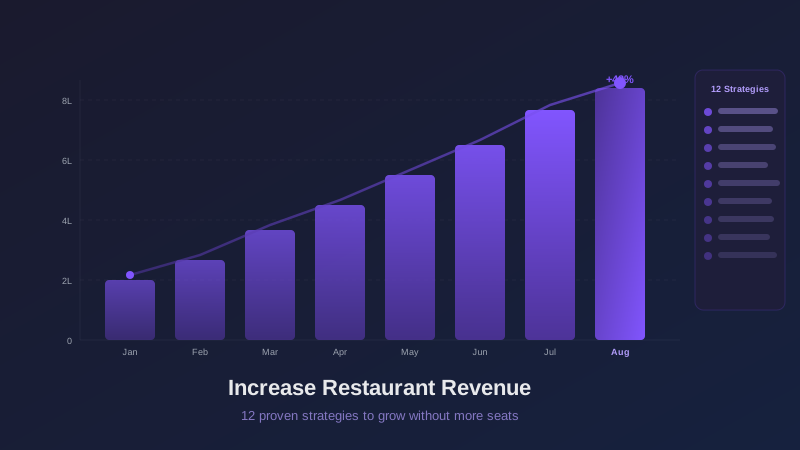
The compounding effect: None of these 12 strategies is a silver bullet in isolation. But implementing five of them consistently — say, upsell training, menu engineering, loyalty, table turnover, and data reporting — can realistically add 25–40% to net revenue within 12 months without changing your footprint, concept, or customer base.
Where to Start
If you are feeling overwhelmed, start with the two strategies that cost nothing and have the fastest payback:
- Upsell training: One 45-minute team briefing this week.
- Menu engineering: Pull your last 60 days of item-level POS data and plot the four quadrants.
Everything else can follow systematically from there. Revenue growth in restaurants is not about chasing silver bullets — it is about stacking small, consistent improvements across every touchpoint in your operation.