The Delivery Trap Most Restaurants Fall Into
Getting listed on Zomato and Swiggy feels like a growth move. You're suddenly visible to hundreds of thousands of users, orders start rolling in, and your revenue graph looks healthy. But spend five minutes looking at your net margin per order — not the revenue, the actual profit — and a very different picture emerges.
Most restaurant owners focus on order volume and top-line GMV. The platforms encourage this by showing you dashboards full of impressive order counts and gross sales. What they don't surface as prominently is how much of that revenue you actually keep after their commission, mandatory packaging upgrades, co-funded discounts, and the invisible cost of customer data you'll never own. This is the delivery trap: growing revenue while quietly shrinking margins.
The truth is that restaurant delivery profitability in India depends almost entirely on your channel mix. A restaurant doing ₹5 lakh in monthly delivery revenue on Zomato and Swiggy alone may be netting less per rupee than a smaller restaurant doing ₹2 lakh across direct orders. Understanding where each channel actually lands on the margin spectrum is the first step to making smarter decisions.
This guide breaks down the real cost of Zomato, the real cost of Swiggy, and the genuine opportunity in direct ordering — with actual numbers so you can see the difference clearly. We'll also cover how to practically shift your customer base toward more profitable channels over time.
The Real Cost of Zomato
Zomato is the dominant food discovery and delivery platform in India, operating in over 850 cities. For most restaurants, it is the first delivery channel they join — and often the one with the highest order volume. But the headline commission figure understates what you are actually paying.
Commission structure: Zomato charges restaurant partners a commission on each order, typically ranging from 18% to 30% of the order value. The exact rate depends on your city, cuisine category, restaurant tier (standalone vs chain), and your negotiated agreement. New restaurants often get an introductory rate of 15–18% for the first 1–3 months, after which standard rates kick in. High-volume restaurants with dedicated account managers can sometimes negotiate down to 20–22%, but the floor rarely dips below 18%.
Packaging costs: Zomato periodically pushes restaurants to use tamper-evident packaging and branded boxes to meet its quality standards. This is a real cost that sits on top of the commission — typically ₹20–50 per order depending on the order size and cuisine type. Biryani boxes, sealed bags, and insulated containers for beverages add up fast at scale.
Discounting pressure: Zomato's algorithm actively promotes restaurants that participate in discount campaigns. If you opt out, your listing visibility drops. If you opt in, you are often contributing 50% of the discount cost yourself (co-funded campaigns) while Zomato covers the other half. On a 20% discount on a ₹500 order, you're absorbing ₹50 before the commission is even applied. During peak sale periods like the Zomato Anniversary Sale or Blinkit-linked promotions, the pressure to participate is intense.
Zomato Gold and Pro membership impact: Gold and Pro members expect to use their membership benefits at your restaurant — typically a buy-one-get-one offer on select items or a percentage discount. When these orders come in, the subsidy structure varies: sometimes Zomato absorbs it, sometimes you share it. Check your agreement carefully. Gold-driven orders look like volume wins but can be margin losers if you haven't priced your menu to account for them.
Adding it all up: on a ₹500 Zomato order, between commission (roughly ₹100–150), packaging (₹25–40), and occasional discounting (₹25–50), your effective deduction before food cost can reach ₹150–240 — that's 30–48% off the top before a single ingredient is accounted for.
The Real Cost of Swiggy
Swiggy pioneered food delivery in India and remains the strongest platform in metro cities, particularly Bengaluru, Hyderabad, and parts of Mumbai. Its logistics infrastructure is widely regarded as faster and more reliable than Zomato's in dense urban areas, which translates to better order ratings for your restaurant. But the financial structure is remarkably similar.
Commission structure: Swiggy's commissions run in the same 18–28% range as Zomato, with similar variation by city and category. One area where Swiggy has historically differed is its willingness to offer category-specific rates — for example, lower commissions for beverages-only brands or breakfast-focused cloud kitchens. If you are operating in a specific niche, it is worth explicitly asking your Swiggy account manager about category pricing rather than accepting the standard contract rate.
Swiggy One subscription programme: Swiggy One (the premium subscription that waives delivery charges) has a large and growing subscriber base. One subscribers tend to order more frequently, which is good for volume — but they also have higher expectations for speed and accuracy. A single rating drop due to a delayed order from a One subscriber can hurt your overall listing rank significantly. The operational bar for Swiggy One-driven orders is effectively higher.
Advertising and featured listings: Like Zomato, Swiggy offers paid placement at the top of category feeds. Restaurant-level advertising on Swiggy typically starts at ₹500–1,000 per day for basic placements in competitive categories in metros. If you are not advertising, your organic rank is determined by rating, order frequency, and fulfilment speed. New listings without strong reviews often get buried without ad spend.
Key difference from Zomato: Swiggy is primarily a delivery-first platform and has limited dine-in discovery features compared to Zomato. This means your Swiggy listing does less work for walk-in business. If you are a standalone restaurant that values discovery for both delivery and dine-in, Zomato may deliver more total value for the same commission rate. However, Swiggy's stronger logistics performance in metros does tend to result in higher customer satisfaction scores, which compounds positively on ratings over time.
Direct Orders: WhatsApp, Website, and Your Own App
Direct ordering is the channel most Indian restaurants underinvest in, and it is consistently the most profitable. When a customer orders directly from you — via WhatsApp, your website, or a branded ordering app — you pay zero commission. You also own the customer relationship, the data, and the ability to market to them again without paying a platform for access to your own customers.
WhatsApp ordering: WhatsApp Business is the most frictionless direct channel available to Indian restaurants today. Over 500 million Indians use WhatsApp daily. A restaurant with a well-set-up WhatsApp Business account — including a catalogue, automated order confirmation, and a clear ordering flow — can handle repeat customer orders at almost no operational cost. The setup investment is low: a WhatsApp Business account is free, and a basic catalogue can be live within a day. The challenge is discoverability — WhatsApp works best for retention (customers who already know you) rather than acquisition (new customers finding you for the first time).
Website with ordering widget: A branded restaurant website with an integrated ordering system gives you full control over the customer experience. You can showcase your menu, tell your brand story, upsell high-margin add-ons, and collect customer contact details for future marketing. Setup costs vary widely: a basic ordering-enabled website can be live for ₹5,000–15,000 as a one-time setup, with payment gateway charges typically at 2% per transaction — vastly lower than delivery platform commissions.
Dedicated ordering app: Building a fully custom app is the premium end of direct ordering, but the cost and maintenance burden make it impractical for most standalone restaurants. A better approach is to use a white-label ordering platform (like ZillOut White) that gives you app-like functionality without the custom development cost.
Customer data ownership: This is the most underappreciated benefit of direct ordering. Every customer who orders through Zomato or Swiggy belongs to those platforms, not to you. You cannot remarket to them via email or SMS. You cannot build a loyalty programme. You cannot segment by order frequency or average spend. With direct ordering, every order creates a data point you control — enabling you to run targeted WhatsApp campaigns, birthday offers, and loyalty rewards that cost almost nothing to execute.
Margin Comparison: What You Actually Keep on a ₹500 Order
Let's run the numbers on a representative ₹500 delivery order across each channel. Assumptions: food cost ratio of 30% (₹150), GST at 5% included in the order price, and standard packaging.
| Cost Component | Zomato | Swiggy | Direct Order |
|---|---|---|---|
| Order Value | ₹500 | ₹500 | ₹500 |
| Platform Commission | –₹125 (25%) | –₹110 (22%) | –₹0 |
| Packaging | –₹35 | –₹35 | –₹25 |
| Payment Gateway | Included in commission | Included in commission | –₹10 (2%) |
| Food Cost (30%) | –₹150 | –₹150 | –₹150 |
| Other Operating Costs | –₹25 | –₹25 | –₹25 |
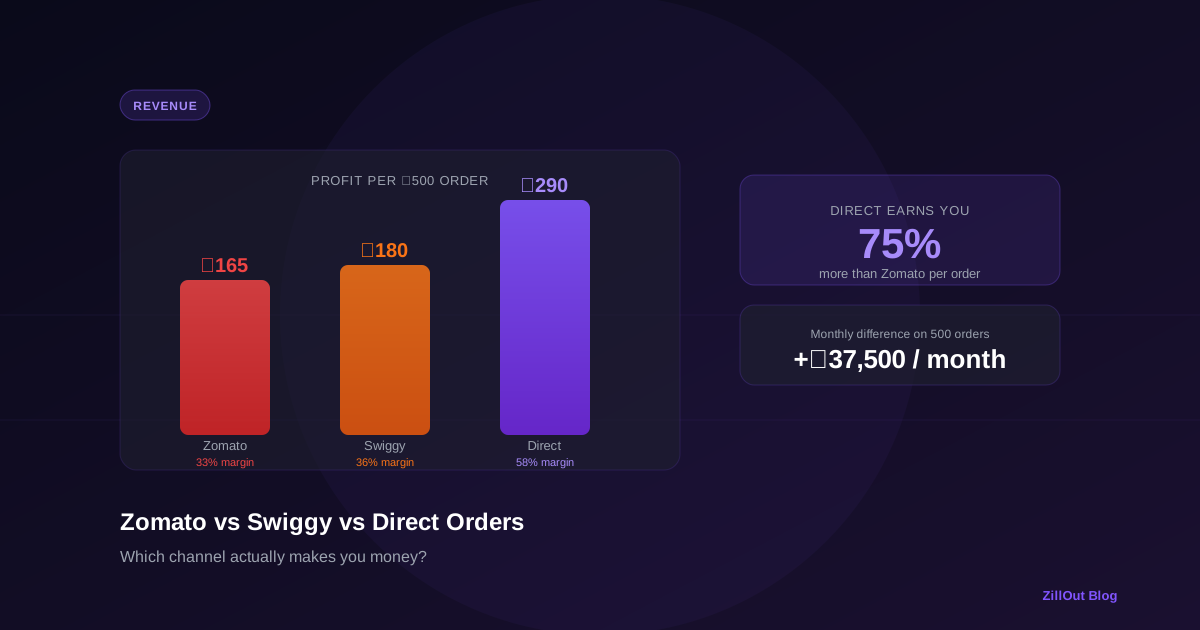
| Net Profit | ₹165 | ₹180 | ₹290 |
| Net Margin | 33% | 36% | 58% |
These numbers assume no co-funded discounting on the platform orders. If you are participating in a 20% discount campaign and absorbing half the cost (a common structure), the Zomato net profit on this order drops to approximately ₹115 — a margin of just 23%. Meanwhile, the direct order margin remains stable at 58% regardless of whether you run a small loyalty reward.
The implication is significant: a restaurant doing 300 orders per month entirely on Zomato at these economics generates roughly ₹49,500 in net profit. The same order volume on direct channels generates approximately ₹87,000 — a difference of ₹37,500 per month in net profit. That is not a rounding error. That is the difference between a business that is surviving and one that is compounding.
When to Use Each Channel
The right answer for most restaurants is not to abandon Zomato and Swiggy — it is to use each channel for what it does best. Delivery platforms are powerful acquisition tools. Direct ordering is where you monetise and retain the customers those platforms helped you find.
Use Zomato for discovery. Zomato's search and recommendation engine is genuinely powerful for new customer acquisition. A strong Zomato presence — good photos, consistent ratings above 4.0, regular reviews — brings new diners to your door (literally and figuratively). Treat your Zomato listing as a marketing asset, not just an ordering channel. The discovery value of a well-maintained Zomato page, particularly for dine-in restaurants, justifies the commission on acquisition orders.
Use Swiggy for delivery volume. Swiggy's logistics strengths make it the better choice for pure delivery performance in most metros. If delivery ratings matter to your business model, Swiggy's fulfilment speed helps you maintain them. Its strong Tier 1 city user base also means higher average order values in many categories. Use Swiggy to maximise delivery order volume, particularly during lunch and dinner peak windows.
Use direct ordering for retention and profitability. Every customer who has already ordered from you once is a candidate for direct channel migration. This is where your margin improvement happens. Once a customer knows your quality and trusts your brand, the platform's discovery function has already served its purpose. From that point on, every order that stays on the platform is paying a toll you don't need to pay.
How to Shift Customers from Delivery Apps to Direct Orders
Moving customers from Zomato and Swiggy to your direct channel requires a deliberate strategy — the platforms make it easy to order again through them, so you need to give customers a reason to choose your channel instead. The good news is that the economics are so favourable on your side that you can afford to offer real incentives while still coming out significantly ahead.
QR codes on every package: This is the highest-leverage, lowest-cost tactic available to you. Print a QR code on your packaging inserts, box labels, or a dedicated card tucked into every delivery bag. The QR should link directly to your WhatsApp ordering link or website. The call to action should be specific: "Order direct and get ₹50 off your next order." You are paying ₹50 to recover a customer who previously cost you ₹125 in platform commission — an obvious trade.
WhatsApp capture and remarketing: If a customer orders through Zomato, you don't get their contact details. But if you include a QR or shortlink that takes them to a WhatsApp message with your number, and they initiate contact, you now have their number. Send them a one-time setup message establishing your direct ordering channel, and you have turned a platform customer into a direct channel relationship. Keep WhatsApp communication valuable — order confirmations, new menu items, exclusive deals — and avoid spamming.
Loyalty programmes: A simple punch-card style loyalty programme — "Order direct 5 times, get your 6th free" — is a powerful retention tool. The critical detail is that it only counts for direct orders, not platform orders. This creates a tangible reason for loyal customers to switch channels. You don't need an app or complex technology to run this — a WhatsApp-based honour system works for most restaurants until order volumes justify something more sophisticated.
Exclusive direct menu items: Consider making one or two popular items available only on your direct channel. This creates genuine FOMO and gives customers a concrete reason to check out your direct ordering option. It works particularly well with seasonal specials or limited-quantity items that create buzz.
Timing matters: The best moment to prompt a platform customer to switch to direct is immediately after a great experience — not generically, but while the satisfaction is fresh. A card in the bag saying "Loved your order? Next time, skip the app and get ₹50 off ordering direct" is more persuasive than a generic "order from us directly" message on a standard flyer.
How ZillOut Helps You Build a Direct Ordering Channel
Building a direct ordering channel from scratch is daunting if you are trying to stitch together separate tools for menus, ordering, payments, and WhatsApp communication. ZillOut's platform is designed specifically for Indian restaurants and venues, and includes everything you need to run a profitable direct channel alongside your platform presence.
ZillOut White is built for restaurants that want a complete digital presence with direct ordering. It includes a fully branded digital menu, a direct order flow that works on mobile without an app download, WhatsApp integration for order confirmations and customer communication, and analytics that show you exactly how much you're earning on direct versus platform orders. For standalone restaurants and cloud kitchens, ZillOut White gives you the infrastructure to compete for direct order customers without the cost of building a custom website or app.
ZillOut Grey addresses the operational challenge of managing multiple ordering channels simultaneously. When orders come in from Zomato, Swiggy, and your direct channel at the same time, the kitchen needs a single consolidated view — not three different tablets. ZillOut Grey integrates all incoming orders into one kitchen management interface, reduces missed orders, and helps you maintain consistent ratings across all channels. This is particularly valuable for cloud kitchens and high-volume QSRs where a single missed or delayed order can hurt a week's rating average.
The combination of a strong direct ordering channel (ZillOut White) and a robust order management system (ZillOut Grey) is what allows restaurants to genuinely reduce their Zomato commission dependency without sacrificing order volume. You acquire customers through the platforms, convert them to direct, and manage all channels efficiently from one place.
Conclusion
Zomato and Swiggy are not the enemy — they are expensive acquisition channels. Used correctly, they fill your top of funnel with new customers and keep your delivery volume high. The mistake is treating them as the only channel, because the commission structure means you are permanently subsidising the platforms every time a repeat customer re-orders through them.
Direct orders — through WhatsApp, your website, or a branded ordering tool — are where restaurant delivery profitability actually lives. The margin difference on a single ₹500 order is the difference between 33% and 58% net margin. Across hundreds of monthly orders, that gap is the difference between a restaurant that's treading water and one that's building real financial resilience.
The strategy is straightforward: use Zomato for discovery, use Swiggy for delivery volume, and systematically migrate your most loyal customers to direct ordering where you keep the full margin, own the data, and control the relationship. Start with a QR code on your packaging this week. The compounding benefit begins from the first customer who scans it.
Frequently Asked Questions
What is Zomato's commission percentage in India?
Zomato charges restaurants a commission of roughly 18–30% per order, depending on the city, cuisine category, restaurant size, and negotiated agreement. New restaurant onboarding packages may offer lower rates of 15–18% for the first few months, after which standard rates apply. High-volume restaurants can sometimes negotiate down to 20–22%, but the floor rarely dips below 18% under normal circumstances.
Is Swiggy or Zomato better for restaurant profitability?
Neither platform is inherently more profitable — both charge similar commissions in the 18–30% range. Swiggy tends to have slightly lower commission structures in some categories and stronger metro-city logistics, while Zomato's discovery ecosystem delivers more value for dine-in restaurants. The more important question is whether delivery platform revenue is profitable at all after accounting for commissions, packaging, and discounting. For most Indian restaurants, direct orders are significantly more profitable than either platform because there is zero commission deducted.
How can I take direct orders from customers without Zomato or Swiggy?
You can accept direct orders through WhatsApp Business (using a catalogue and order management flow), a branded restaurant website with an ordering widget, or a white-label ordering platform. Tools like ZillOut White provide a digital menu and direct ordering capability that restaurants can set up quickly without building a custom app. Payment can be collected via UPI, with gateway fees of approximately 2% — a fraction of platform commissions.
How do I reduce my dependence on Zomato commission?
The most effective way to reduce Zomato commission dependency is to build a direct ordering channel in parallel and actively migrate repeat customers to it. Use QR codes on packaging to nudge delivery customers toward WhatsApp or your website for repeat orders. Offer a small loyalty benefit — a free item or discount — for ordering direct. Over time, even shifting 20–30% of repeat customers to direct ordering significantly improves your overall margin without reducing total order volume.
What is restaurant delivery profitability in India after all costs?
On a typical ₹500 delivery order, after Zomato or Swiggy commission (₹90–150), packaging (₹25–40), and food cost (approximately 30%), a restaurant typically retains ₹165–180 in net profit — a margin of 33–36% before discounting. With co-funded discounting applied, margins can drop to 20–25%. The same order placed directly through WhatsApp or a restaurant website yields approximately ₹290 in net profit (58% margin) because there is no commission deducted, making direct ordering the most profitable channel per order.